
Network for Neutrinos, Nuclear Astrophysics, and Symmetries (N3AS)
An NSF Physics Frontier Center
-
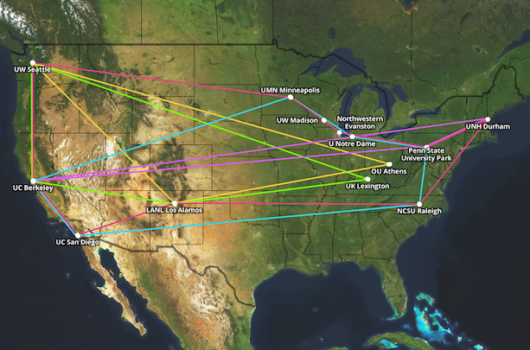
Collaboration
N3AS is training a new generation of postdoctoral fellows in key interdisciplinary areas important to astrophysics and cosmology.
-
Research Themes
Learn about our researchers' focus on neutrino physics, nucleosynthesis, dense matter, dark matter, and more.
-
Browse Publications
Search and view a database of N3AS collaborators' research.
-
Popular Science Articles
Start discovering these topics with accessible online articles.
About N3AS
The Network for Neutrinos, Nuclear Astrophysics, and Symmetries (N3AS) is a multi-institutional collaboration dedicated to recruiting and training postdoctoral researchers interested in neutrino physics and astrophysics, nuclear astrophysics topics ranging from supernova and neutron star modeling to dark matter, and fundamental symmetries. The collaboration is funded by the National Science Foundation and the Heising-Simons Foundation.
![]()
Upcoming Events
N3AS Newscenter
-
Fall 2026 Undergraduate Program
Students in the BURN@N3AS undergraduate program are directly supported by N3AS. Students work with a scientific mentor to develop their research, and also have a career mentor.
-
Hunting Dark Matter with Atom Gradiometers
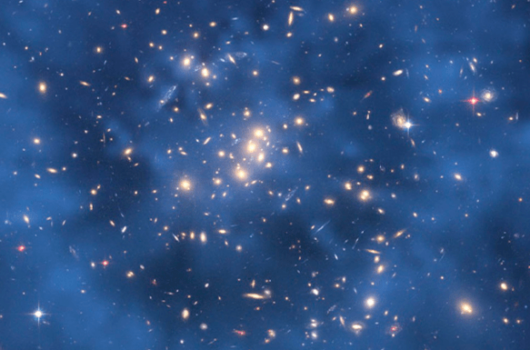
Dark matter is one of the deepest mysteries in fundamental physics. While the existence of dark matter has been robustly established over the past decades through a combination of astronomical (e.g. the rotation of galaxies, the Bullet Cluster) and cosmological (e.g. anisotropies in the cosmic microwave background) observations, we still do not know what it is made of.
-
N3AS Member George Fuller Elected to National Academy of Sciences
It was recently announced that George Fuller has been elected to membership in the National Academy of Sciences, as a part of the class of 2026. Election, which recognizes distinguished […]
-
2026 N3AS Summer School
The N3AS-sponsored Summer School on Multi-Messenger Astrophysics is intended for advanced graduate students and beginning postdoctoral researchers interested in nuclear and particle astrophysics. Applications due June 5, 2025.